TIME TO ABOLISH THE DEATH PENALTY: TENNESSEE TRIED TO KILL CHRISTA PIKE. THE STATE FAILED. SHE IS STILL ALIVE.
By Crime Vault Magazine | October 1, 2026
Tennessee did not carry out a clean execution on September 30, 2026. It carried out a failure in public.
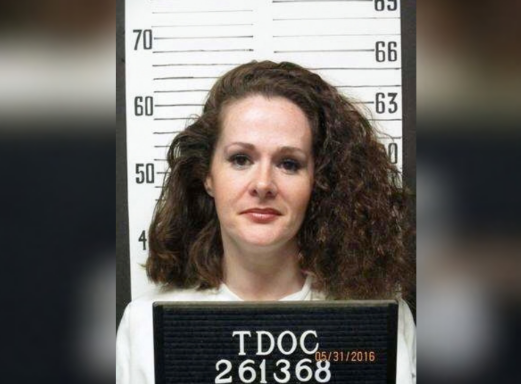
Christa Gail Pike, 50, the only woman on the state’s death row, was scheduled to die by lethal injection at Riverbend Maximum Security Institution in Nashville for a murder she committed at 18. She would have been the first woman executed in Tennessee in more than 200 years. Governor Bill Lee had denied clemency. The U.S. Supreme Court lifted a last-minute stay. The warrant was running out at midnight.
Then the procedure broke.
According to her lawyers and media witnesses, the execution team went through multiple needles trying to find a vein. She was given two doses of pentobarbital. She did not lose consciousness. Witnesses said she was still breathing and could be heard snoring nearly an hour later. She was taken by ambulance to a hospital. On October 1 her attorney, Randy Spivey, said she was in critical condition and receiving life-saving care. Lee ordered a third-party review and halted the remaining scheduled execution for the rest of the year. It was the state’s second failed execution this year.
That is the case for ending the death penalty. Not a theory. A body the state could not kill on schedule, after thirty years of saying it would.
THE CRIME IS NOT IN DISPUTE
This article does not rewrite 1995.
On January 12, 1995, in Knoxville, Pike and two others attacked 19-year-old Colleen Slemmer, a classmate from the Job Corps program. Slemmer was beaten, slashed with a box cutter, and tortured. A pentagram was carved into her chest. A piece of her skull was taken. Pike was 18. She was convicted in 1996 of first-degree murder and conspiracy to commit murder and sentenced to death. She has not denied guilt. Slemmer’s family has long supported the sentence. Her mother was at the prison on Wednesday.
The co-defendant who was with her, Tadaryl Shipp, was 17. He was too young for the death penalty under Tennessee law and received life. Same killing. Different birthdays. One person spent three decades waiting to be killed by the state. The other did not.
A system that can do that is not delivering equal justice. It is delivering a lottery based on age, timing, and which governor is in office.
WHAT THE STATE ACTUALLY DID
Pike’s lawyers had warned that her medical condition could complicate lethal injection. The state went ahead anyway.
After a nine-hour delay — a Sixth Circuit stay, then a Supreme Court order letting the execution proceed, with Justices Sotomayor, Kagan, and Jackson dissenting — Tennessee raced the clock. The team stuck her again and again. The drug did not do what the protocol promised. Lawyers described burning and blistering and said the pentobarbital likely went into tissue instead of the bloodstream. They called it cruel and torturous and asked the governor to commute the sentence to life.
Lee, who had refused clemency days earlier, then paused the machinery. A review after the damage is not a safeguard. It is an admission that the safeguard failed while a person was strapped down.
Lethal injection was sold as the humane replacement for the chair and the rope. Botched executions keep proving the sales pitch was a lie. If the state cannot reliably end a life without turning the death chamber into an emergency room, it does not have a punishment. It has an experiment.
WHY THIS IS THE MOMENT TO ABOLISH IT
Thirty years is not swift justice. It is a second sentence served before the first one is even carried out. Pike has been on death row since she was a teenager. The person the jury sentenced in 1996 is not the person on the gurney in 2026. That does not erase Slemmer. It does mean the state is no longer punishing the crime in real time. It is punishing a file.
The death penalty also cannot be undone. A botched execution that leaves someone in critical care is the rare case where the mistake is still visible. Most errors in capital cases are not. Wrongful convictions, buried mitigation, childhood trauma never put in front of a jury — Pike’s own lawyers have argued for years that abuse and her age were not fully weighed — do not come with an ambulance and a press conference.
Tennessee just showed the country the machinery at its worst: a horrific murder, a sentence that split two defendants by a year of age, a governor who said no to mercy, a Supreme Court that cleared the path, and a protocol that could not finish the job. The victim’s family waited three decades for a result the state could not deliver cleanly.
Life without parole is not softness. It is a sentence that does not require the government to practice killing until it gets it right. Colleen Slemmer is not brought back by a second dose of pentobarbital. Neither is the idea that the state can kill without cruelty.
Crime Vault’s position is simple. The crime was real. The punishment just failed in front of witnesses. When the government cannot carry out death without torture, delay, and a hospital transfer, it is time to abolish the death penalty.
About the Author