FEDERAL LAWYER BATTLING CANCER MOVES TO TOSS DRUG CASE HE SAYS WAS BUILT TO BREAK A FAMILY
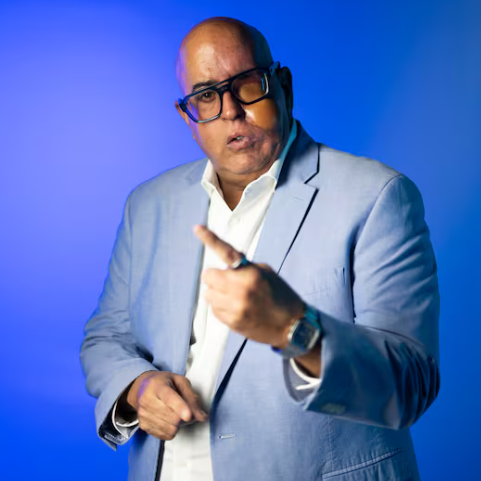
SAN JUAN — In the middle of his fight with cancer, federal defense attorney Edwin Prado-Galarza did not stop at testimony. He filed to kill the case.
Prado — who has publicly described an aggressive tumor behind his left eye, the loss of that eye, and treatment in Florida — represents Minerys Burgos-Cáez and Steven Omar Padilla-López, the wife and the brother of co-defendant Edwin Padilla-López. The case is United States v. Burgos-Cáez, et al., Crim. No. 3:23-cr-00273 (PAD), before Chief Judge Pedro A. Delgado-Hernández in the U.S. District Court for the District of Puerto Rico.
Defense counsel announced joint pretrial motions asking the court to dismiss with prejudice Counts One through Six of the First Superseding Indictment for prosecutorial misconduct and bad-faith prosecution, and to order disclosure of the grand-jury materials used to obtain those counts.
The core claim is blunt: the narcotics charges against the wife and the brother were never backed by evidence — that they were, in substance, fabricated — and that their real purpose was not to try two people for crimes they committed, but to hang federal felonies on a spouse and a sibling so Edwin Padilla-López would drop his own defense and plead guilty.
The prosecutor’s words
The motions rest on two sworn declarations under 28 U.S.C. § 1746. On August 6, 2026, during a reverse-proffer by videoconference, Assistant U.S. Attorney R. Vance Eaton — one of the prosecutors who signed the First Superseding Indictment — told defense counsel the United States has no witness and no evidence to support Counts Two through Six against either defendant.
Asked how the government would prove the remaining conspiracy count, Eaton said Burgos-Cáez “was spending her husband’s money” on goods, vehicles, and houses. Asked what the grand jury had been told in order to return Counts Two through Six, he said only that he was “standing on Count One.”
At the end of the meeting, the prosecutor said a plea agreement would be sent. It never was. In the month that followed, the government dismissed no count under Rule 48(a), named no witness, and added nothing to its discovery designations. The charges it admits it cannot prove remain on the docket.
How they got charged
Neither Burgos-Cáez nor Padilla-López was named in the original July 17, 2023 indictment, which charged 38 people in a drug-trafficking conspiracy tied to public-housing projects in Caguas. Thirteen months later, on August 21, 2024, a grand jury returned a First Superseding Indictment adding the wife and the brother — as the case against Edwin Padilla-López was moving toward resolution.
When the government had to designate the evidence it intended to use, it listed 114 items as to Burgos-Cáez and 60 as to Padilla-López. Every item is a financial, tax, employment, or platform record. Between the two defendants, the designations contain no controlled substance, no controlled buy, no drug ledger, no firearm, no drug-point surveillance, no wiretap, no phone extraction, no cooperating-witness statement, and no statement by either defendant.
The only surveillance of Steven Omar Padilla-López is a single drive-by on July 10, 2024: a man leaving a house at 6:20 a.m. Certified wage records the government itself obtained place him in hourly work in Pennsylvania for five consecutive quarters of the charged conspiracy period. A Puerto Rico Treasury certification secured eight weeks before he was indicted shows he has never appeared on a real-estate transfer filing.
“Two people were charged with distributing narcotics, and the government cannot point to a single gram of narcotics, a single witness, or a single act,” the filings state.
The defense says the only explanation that fits the record is that they were charged because of who they are married to and related to — and that an indictment obtained on that basis, then held over a family as a bargaining chip, is a use of the criminal process due process does not allow. They cite Bordenkircher v. Hayes: to punish a person for doing what the law plainly allows is a due-process violation of the most basic sort.
Leverage, not proof
Charges the government concedes it cannot prove cannot lawfully support a guilty plea and cannot be tried, the defense argues. Their only remaining function is coercion — aimed not only at the wife and brother, but at Edwin Padilla-López, who must choose between fighting his own case while they sit under unsupported felony counts with mandatory-minimum exposure, or surrendering his defense to get them off the hook.
“An indictment is not a bargaining chip,” the filing says.
The Justice Manual directs that charges that are “no longer readily provable” be dismissed. The government has not done so.
The grand jury question
The defense says only two possibilities exist: the grand jury was given no evidence on Counts Two through Six as to these two defendants and returned them anyway, or it was given “evidence” the government has since abandoned and will not describe. Either one, they argue, casts grave doubt on whether the decision to indict was free of substantial prosecutorial misconduct — the standard for dismissing an indictment.
A companion motion seeks grand-jury transcripts, exhibits, and instructions under Rule 6(e), or in-camera review. If misconduct started in the grand-jury room, Prado warns, the problem is not five counts. It is the indictment.
Relief sought
Dismiss Counts One through Six as to both defendants with prejudice. In the alternative: order the United States to say in writing within 14 days whether it disputes the sworn account of the August 6 meeting; show cause why the counts should not be dismissed; hold an evidentiary hearing; and open the grand-jury record.
Prado’s statement
“My clients were not indicted because of anything they did. They were indicted because of who they love. A wife was charged because she is married to a defendant; a young man who was earning hourly wages in Pennsylvania was charged because he is that defendant’s brother. The prosecutor has now told us, in so many words, that he has no witness and no evidence against them for five felony counts — and he will not tell us what the grand jury was shown to obtain those counts. Charges that were brought without evidence and are kept alive without evidence are not charges. They are a hostage note addressed to Edwin Padilla-López, and the message is: give up your defense, and we will let your family go.
“We will not accept that.”
Note to readers: These are allegations in defense motions and sworn declarations. The United States has not yet responded. The Court has not ruled. All defendants are presumed innocent unless and until proven guilty beyond a reasonable doubt.
Cancer did not pull Prado out of federal court.
The motion is on file.
About the Author